Unifying a Home Over Time
By the time you’ve lived in a house for a while, something shifts. I’m not talking about floorboards, although that can happen, too. You’re no longer noticing what doesn’t work—you’re forced to decide what can’t wait. This stage lacks the fun of planning and dreaming. It’s much simpler—and much more real.
When Function Comes Before Vision
When we hit this stage with our now 10-year old home, we weren’t trying to visually improve the house. We were trying to stabilize it so daily life worked. Function became front and center. We encountered more than a few please-don’t-break-down-on-a-random-Tuesday moments!
Stabilization makes your home livable again, so you can return to planning and dreaming. It’s the adulting stuff we swore we wouldn’t do in our youth but eventually realized we had no choice but to succumb.
The Decisions That Couldn’t Wait
Some of the first things we addressed weren’t exciting or visible—but they affected everything. The original carpet had to go. Between pets, age, and allergies, it wasn’t just worn—it was affecting how we lived in the house every day.
The water heater was making noises that no appliance should ever make. It wasn’t broken yet, but it was headed there. The toilets ran frequently and annoyingly enough that they could not be ignored. Our air conditioner turned on, but didn’t actually cool the house. And where we live, that’s not something you can wait and see about once spring arrives.
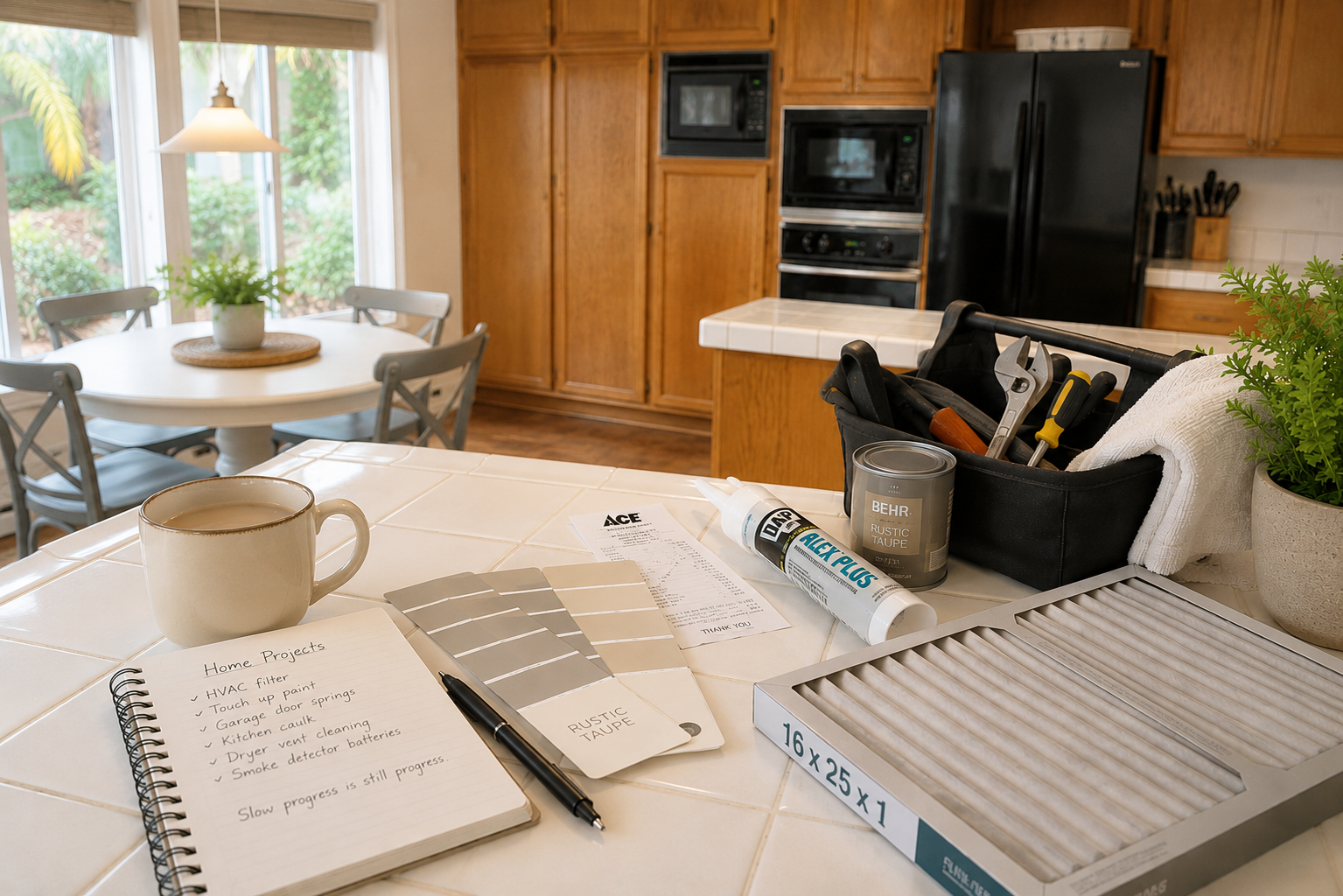
None of these decisions were glamorous. But every one of them reduced friction across the house.
Why Paint Mattered Just as Much
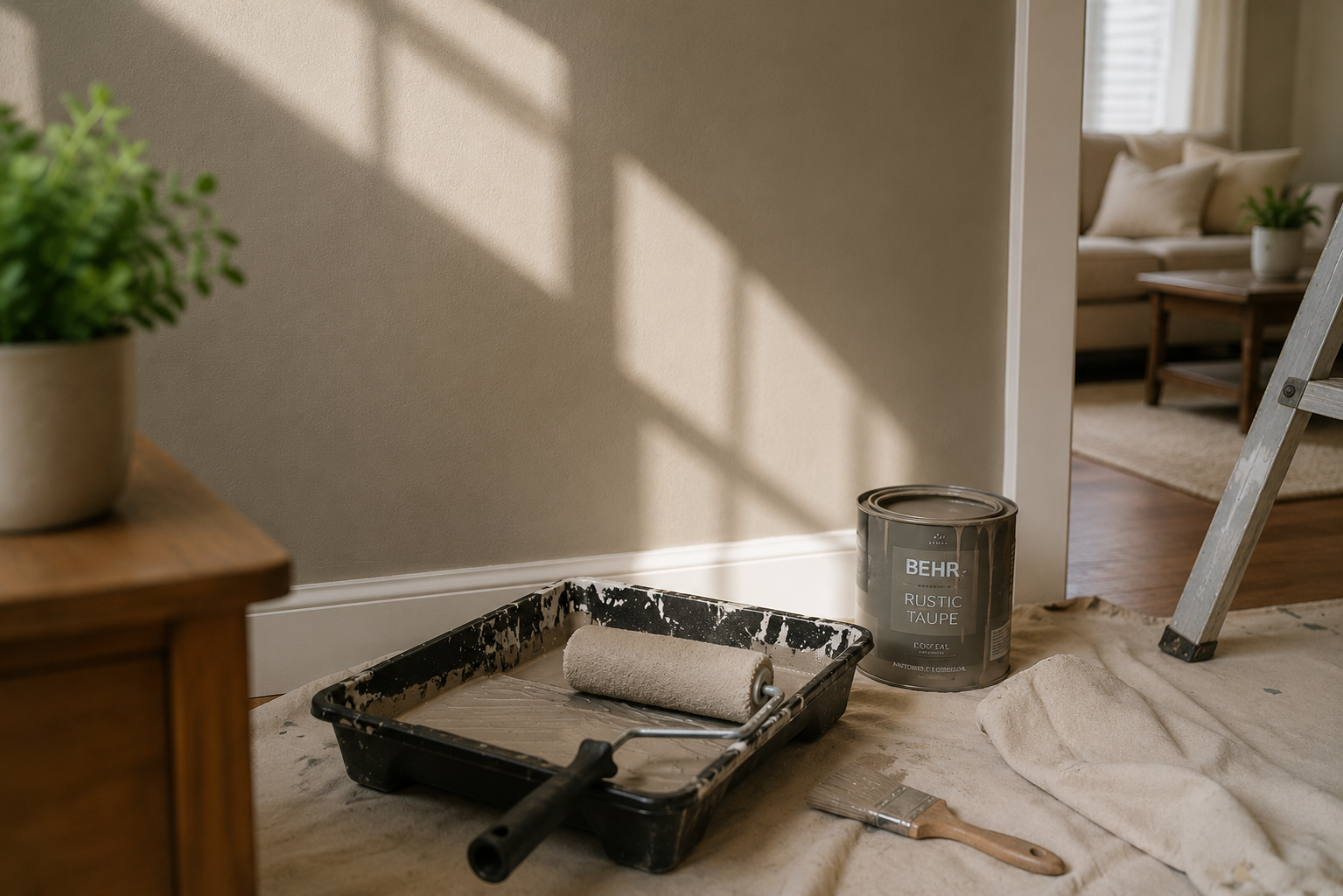
Painting, on the other hand, was different. Every wall was off-white. And while there’s nothing wrong with off-white, I needed something to feel pretty. Something to feel like forward movement. Something that said, “We live here now.” Painting wasn’t part of a long-term strategy. It was emotional relief. And that mattered, too, so it got prioritized along with the stabilization efforts. You might say it stabilized my peace of mind – which is no small matter.
How These Choices Began to Unify the House
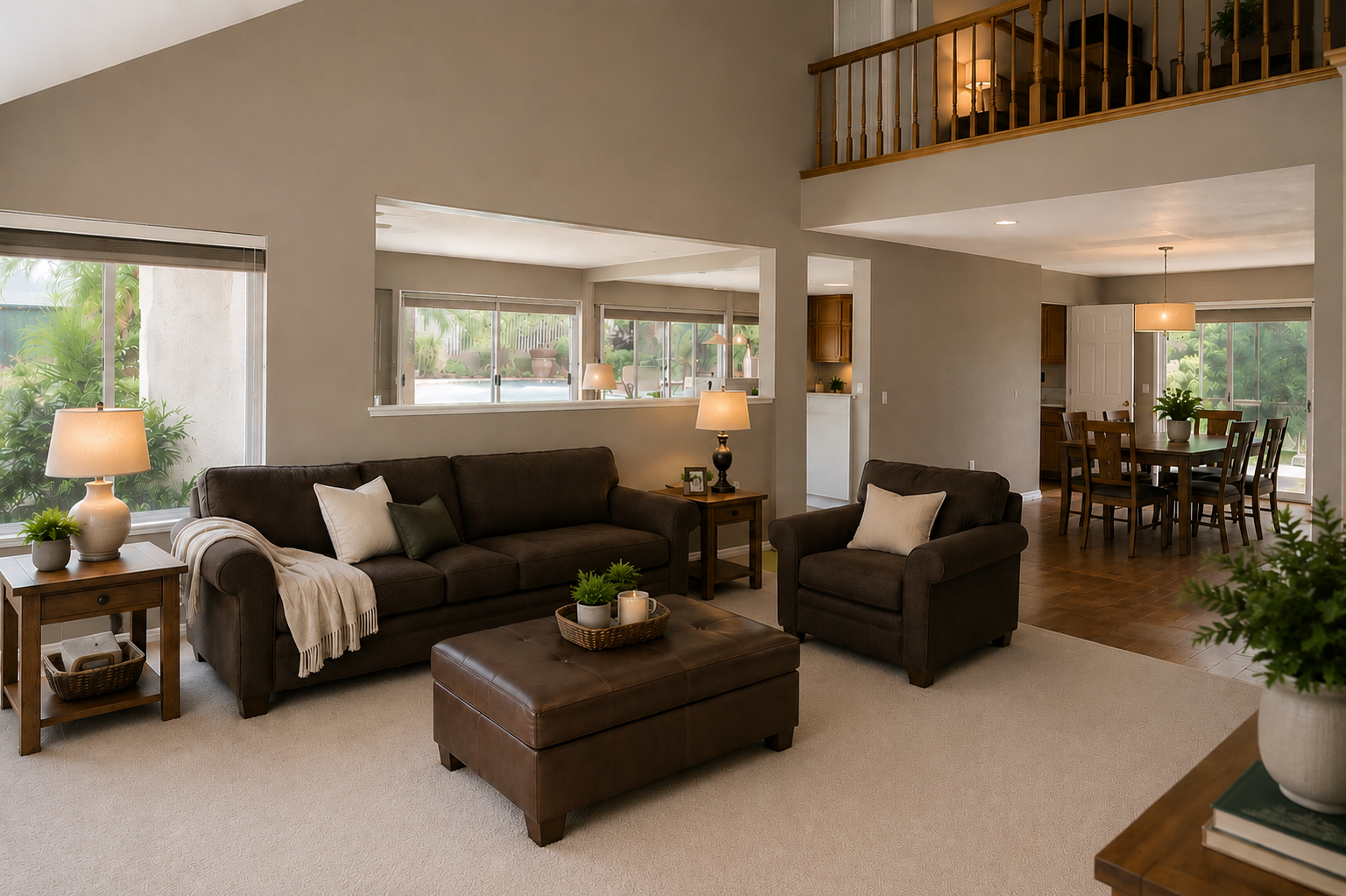
What we didn’t realize at the time was that these early decisions were shaping the house in a meaningful way. Not through matching finishes or coordinated styles—but through consistency. Each choice reduced stress. Each one made daily life easier. Each one supported the entire house, not just one corner of it.
That’s when the house began to feel calmer. Not finished—but steadier.
There were plenty of things we didn’t tackle right away. Big projects waited. Long-term plans stayed loose. Waiting wasn’t failure. It was restraint, which can be challenging for people like me – and I imagine many of you – who want to dive into all the style and beautification projects as quickly as possible.
What Comes Next
Once the house felt stable, we were finally able to make bigger decisions—about where to go all in, and where to go next. Back to the fun stuff!
Now, what will you do next to love where you live?
Be sure to visit The Redesign Habit to share your redesign stories or reach out with your questions. We’d love to hear what you’re working on.
For more great stories and ideas please follow us on Facebook, Instagram, and subscribe to our YouTube Channel.