
You know that room in your house that looks lovely during the day? You walk through, admire your handiwork, and think, Yep, I nailed this one. Then the sun goes down and that same room has all the charm of a cave with a sofa.
Read on to learn how to fix it and, potentially, make it look even better at night than in daylight.
Daylight Has Been Doing the Heavy Lifting
Natural daylight is wonderful. Streaming through your windows, it bounces around, softens shadows, and makes colors and textures look amazing. It does all that without you lifting a finger. But when the sun clocks out for the day, you might expect a ceiling light to take over, but it’s not up for the task.
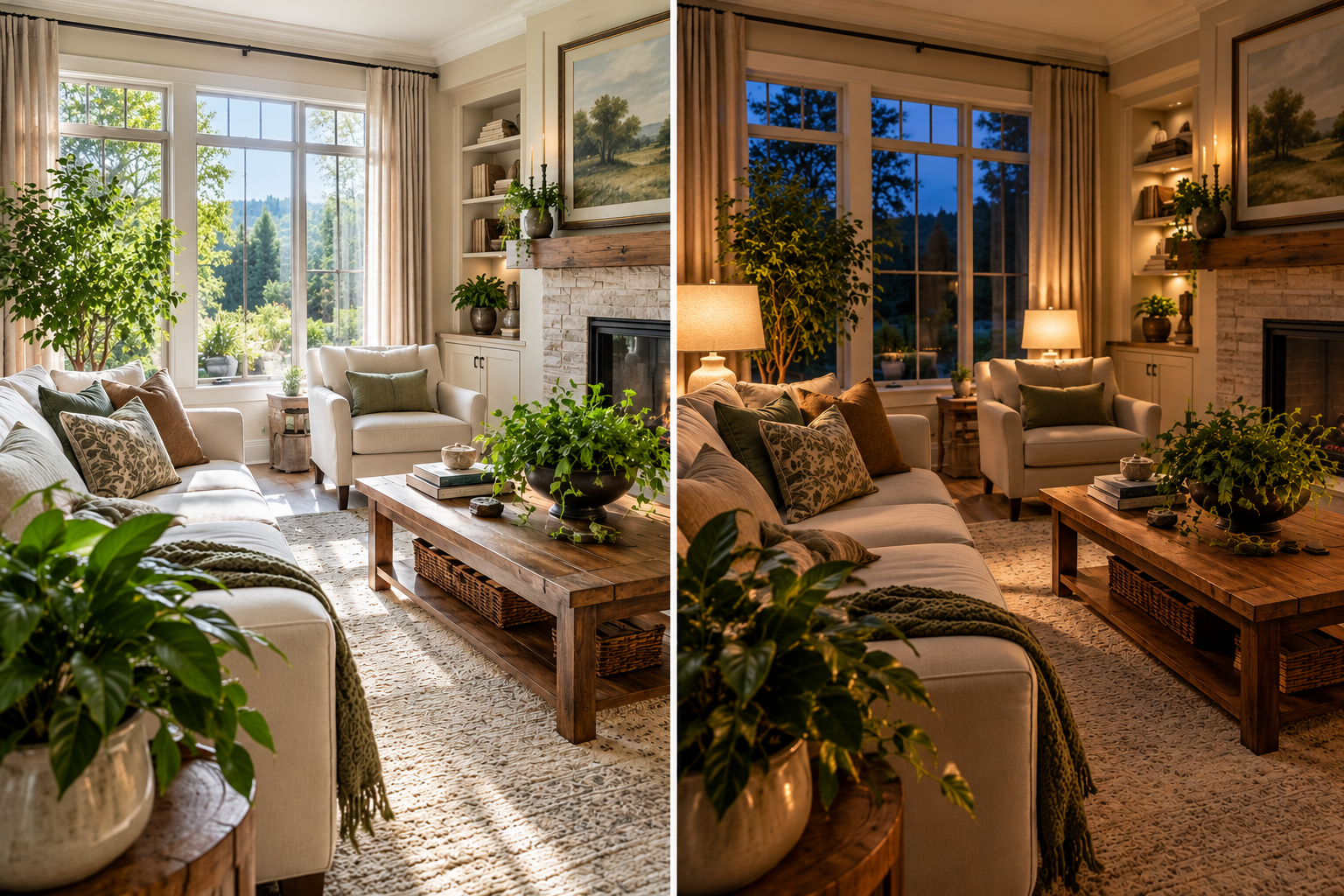
Your first instinct might be to put in a brighter bulb. But more light isn’t always the answer. Your room can be bright enough to perform brain surgery and still not improve the space. The trick isn’t how much light you have. It’s the light source and what its being asked to do.
One Room, Three Jobs
Good lighting often involves three types of lights working together. And before you start mentally adding up the cost of three new fixtures, don’t worry. You may already have everything you need.
Ambient lighting: general lighting that allows you to walk across the room without introducing your shins to the coffee table. Ceiling fixtures, recessed lights, and larger lamps can provide that overall illumination.
Task lighting: its superpower is allowing you to do something specific ̶ reading, cooking, working on a puzzle, or trying to thread a needle without thinking you need new glasses.
Accent lighting: the designer’;s favorite that draws attention to artwork, highlights a bookcase, or brings out an architectural detail you might not notice otherwise.
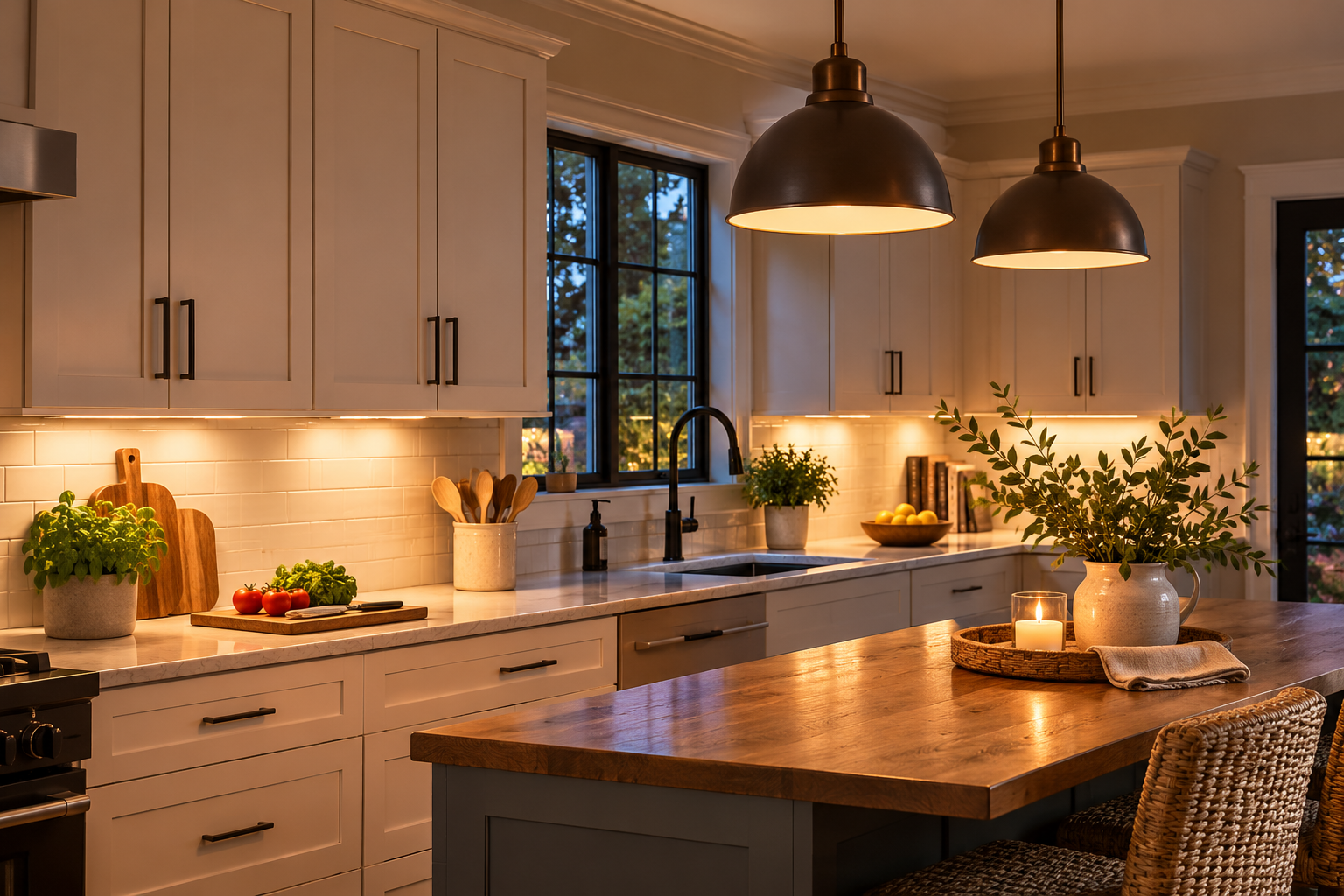
When these three types of lighting work together, you get a room that feels more balanced and comfortable. And you don’t have to turn everything on at once.
The idea is to give your room options. Bright enough when you’re cleaning, comfortable when you’re reading, and soft and inviting when you’re finally ready to sit down and enjoy a peaceful space.
Sometimes the Light Is the Star
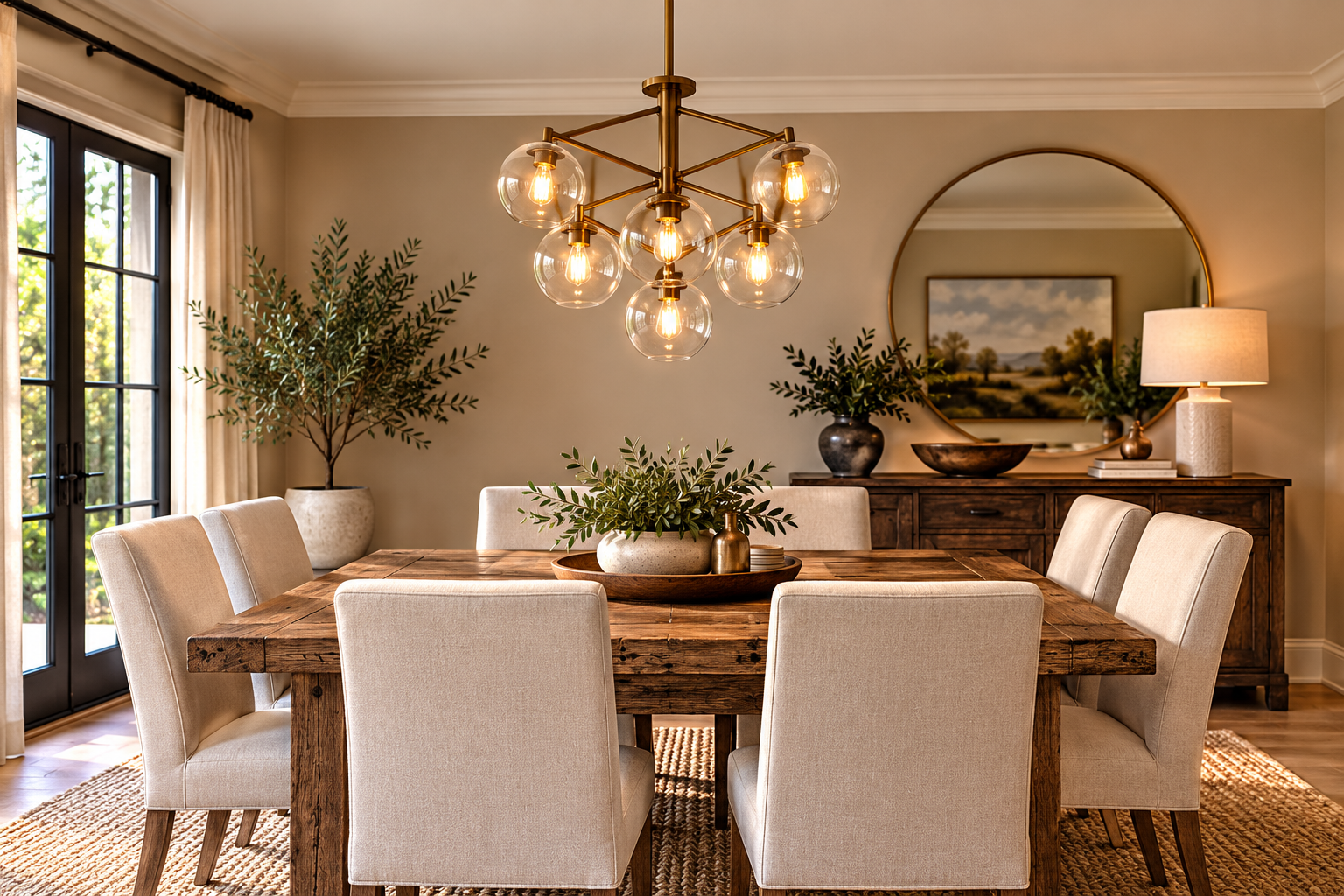
Lighting doesn’t always have to play a supporting role. Sometimes the fixture itself deserves a little attention. Consider a beautiful chandelier, an funky pendant light, or a distinctive table lamp as part of your decor rather than simply a functional tool that holds a light bulb.
Some of the most interesting lighting effects may go without notice during the day. One of my favorite tricks is using small uplights tucked behind a grouping of potted floor plants. When they’re on in the evening, light shines up through the leaves casting beautiful shadows. It’s a simple way to bring a dark corner to life without adding another large fixture.
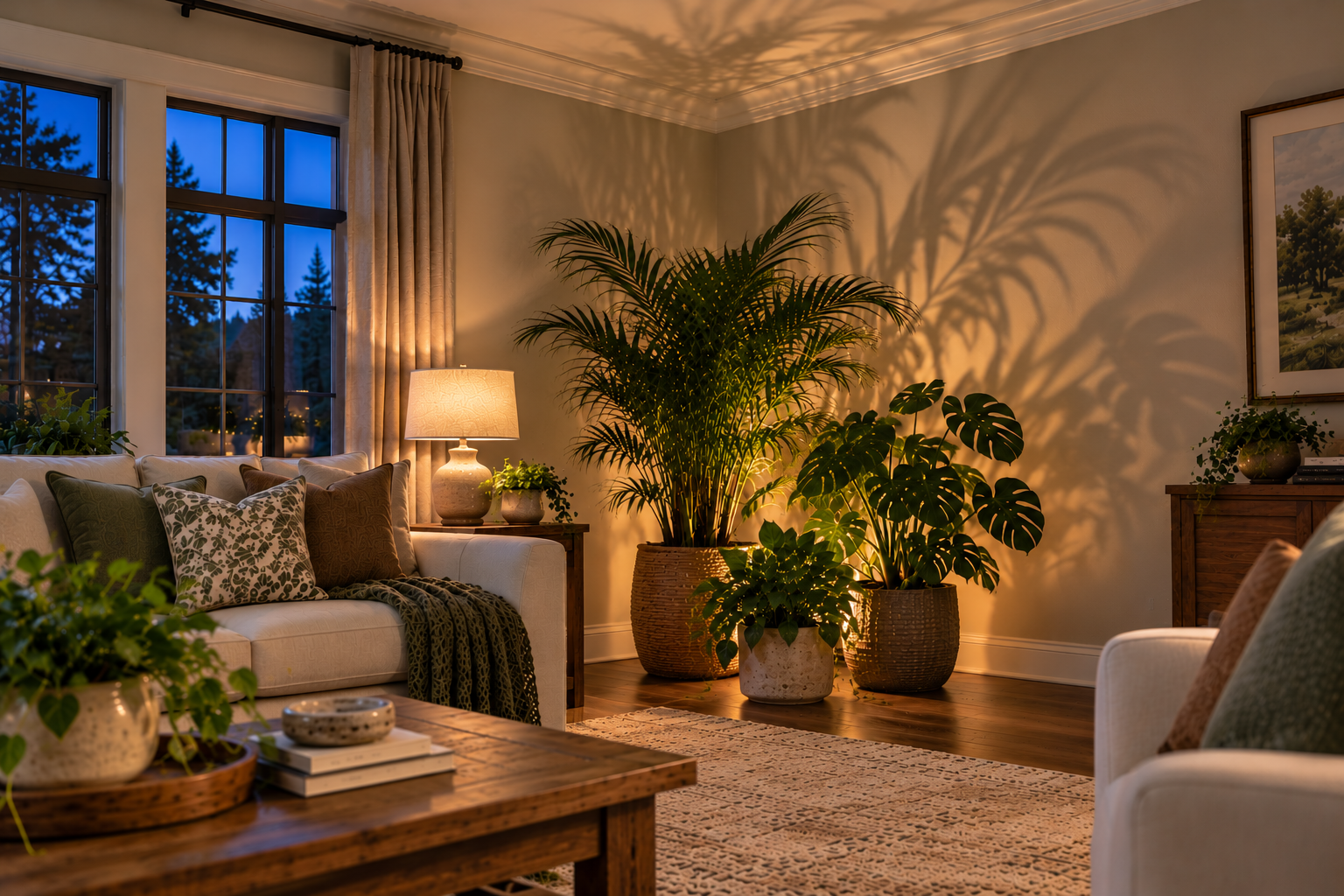
Artwork, textured walls, or architectural features create similar opportunities. Carefully placed light can draw attention to something wonderful but typically unnoticed. And sometimes doing nothing works best, creating contrast between light and shadow to make a space feel special.
PRO TIP: Before you start shopping for a new fixture, take a look at what you already have. I had a perfectly good dining room light fixture that was looking a little tired in its original nickel finish. Did I replace it? Of course not. I gave it a coat of bronze spray paint. Same fixture, completely different look, and considerably less expensive than buying a new one.
Bulbs Matter
You can have the prettiest light fixture in the world, but using the wrong bulb makes the whole room feels off. Too warm and everything takes on a yellowish glow. Too cool and your cozy living room starts looking like a doctor’s office.
Fortunately, you have options. When you’re shopping for light bulbs, pay attention to whether the package says warm white, soft white, cool white, or daylight. Those descriptions tell you what kind of light the bulb produces, and they can make a big difference in how your room looks. Some bulbs have adjustable settings that let you choose the tone you prefer.
I have recessed lighting throughout my house, and I’ve adjusted the bulbs depending on how we use each room. My laundry room has brighter, more daylight-like lighting because I want to see what I’m doing. The powder room, on the other hand, has a slightly warmer tone because I want it to feel more inviting. Same house, different rooms, different needs.
And let’s talk about bathroom vanity lighting for a minute. If you wear makeup, this one matters! Have you ever finished getting ready, thought everything looked terrific, and then caught sight of yourself in natural daylight? Suddenly, that beautifully blended makeup isn’t quite as blended as you thought.
The wrong lighting can make it difficult to judge colors accurately, so look for bulbs that provide clear, natural-looking light without making everything too yellow or too blue. Good lighting around your face, rather than just overhead, makes a difference too.
One other thing worth remembering: brighter isn’t necessarily better. You want enough light to do what you need to do, but you also want it to feel comfortable. And if you’re using several lamps in the same room, try to keep their light tones reasonably consistent. Otherwise, one corner can feel warm and inviting while another feels completely out of place.
A Different Look After Dark
The next time you’re home in the evening, take a few minutes to examine your lighting and how it is enhancing your space – or not. Turn on different lamps, notice where shadows fall, and see whether moving a light or changing a bulb makes a difference. Sometimes small adjustments can make a big difference.
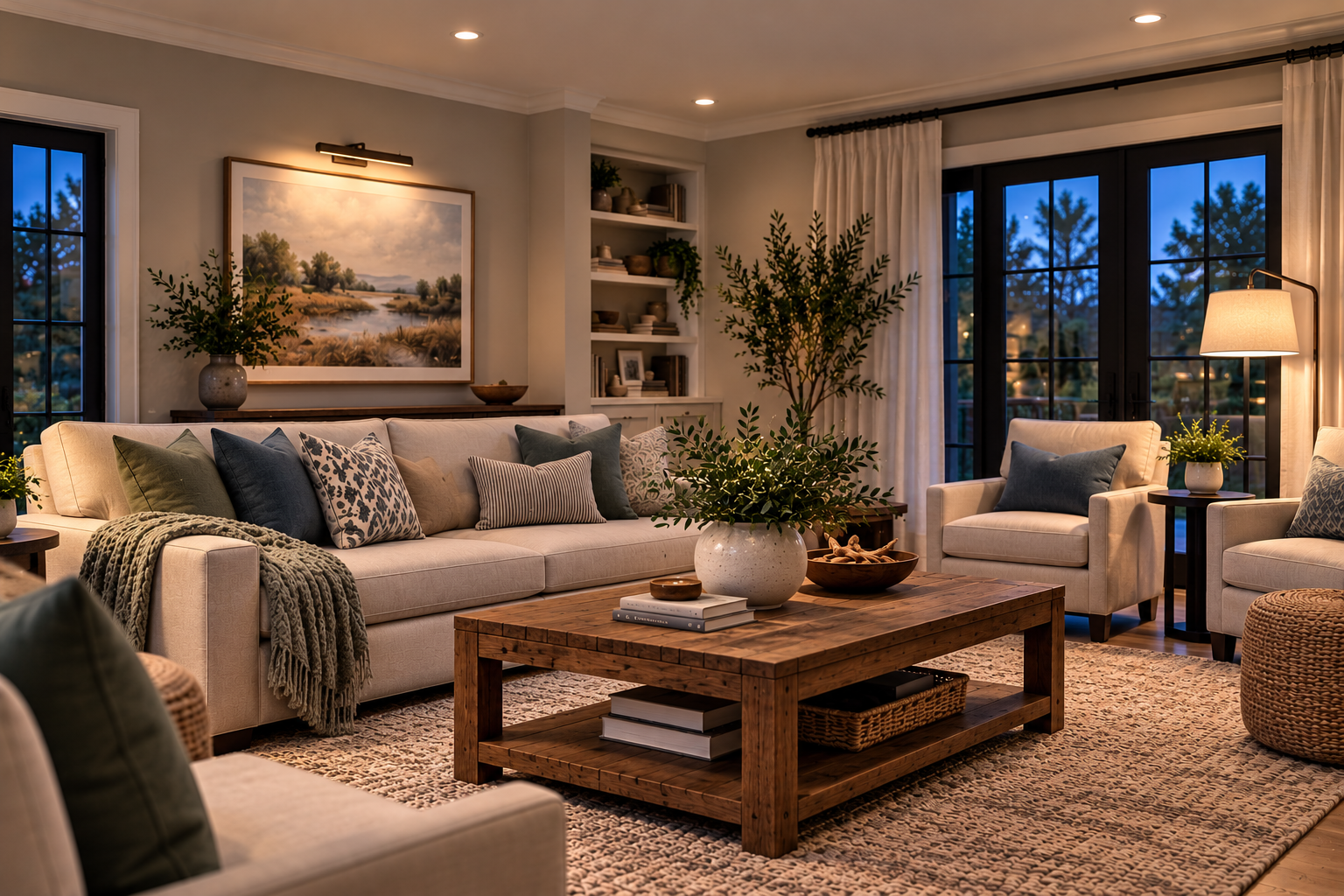
Your home won’t and shouldn’t look exactly the same at night as it does during the day. Take advantage of that reality to give your rooms unique personalities in the phases of light and dark. After all, you should be able to love where you live even after the sun goes down.
Be sure to visit The Redesign Habit to share your redesign stories or reach out with your questions. We’d love to hear what you’re working on.
For more great stories and ideas please follow us on Facebook, Instagram, and subscribe to our YouTube Channel.