Yearly Reset Home Improvement Conversations
At an important point in our home journey, we learned that trying tackle everything at once was a quick way to create stress, overspend, and lose sight of why we were improving the house in the first place. There’s always another project waiting, and the wish list never fully disappears.
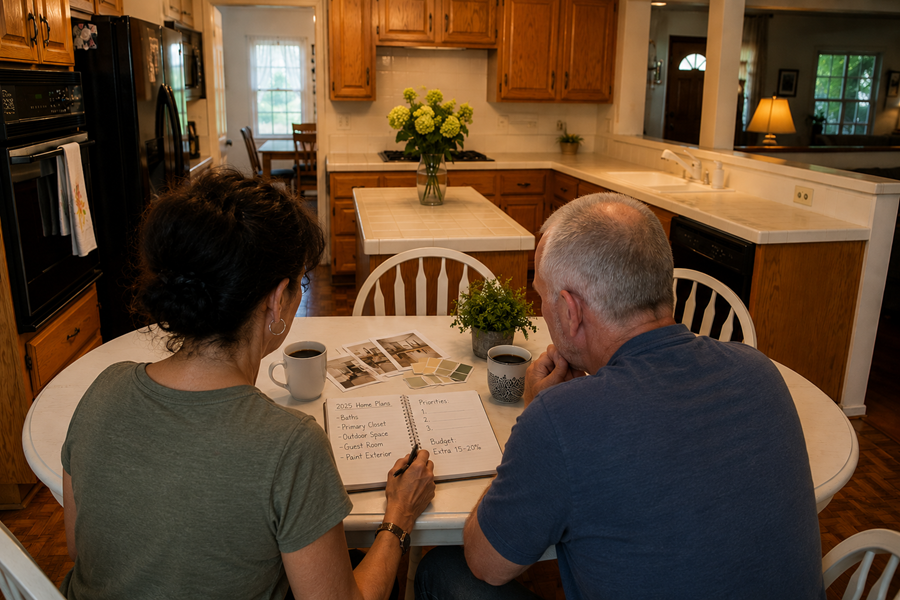
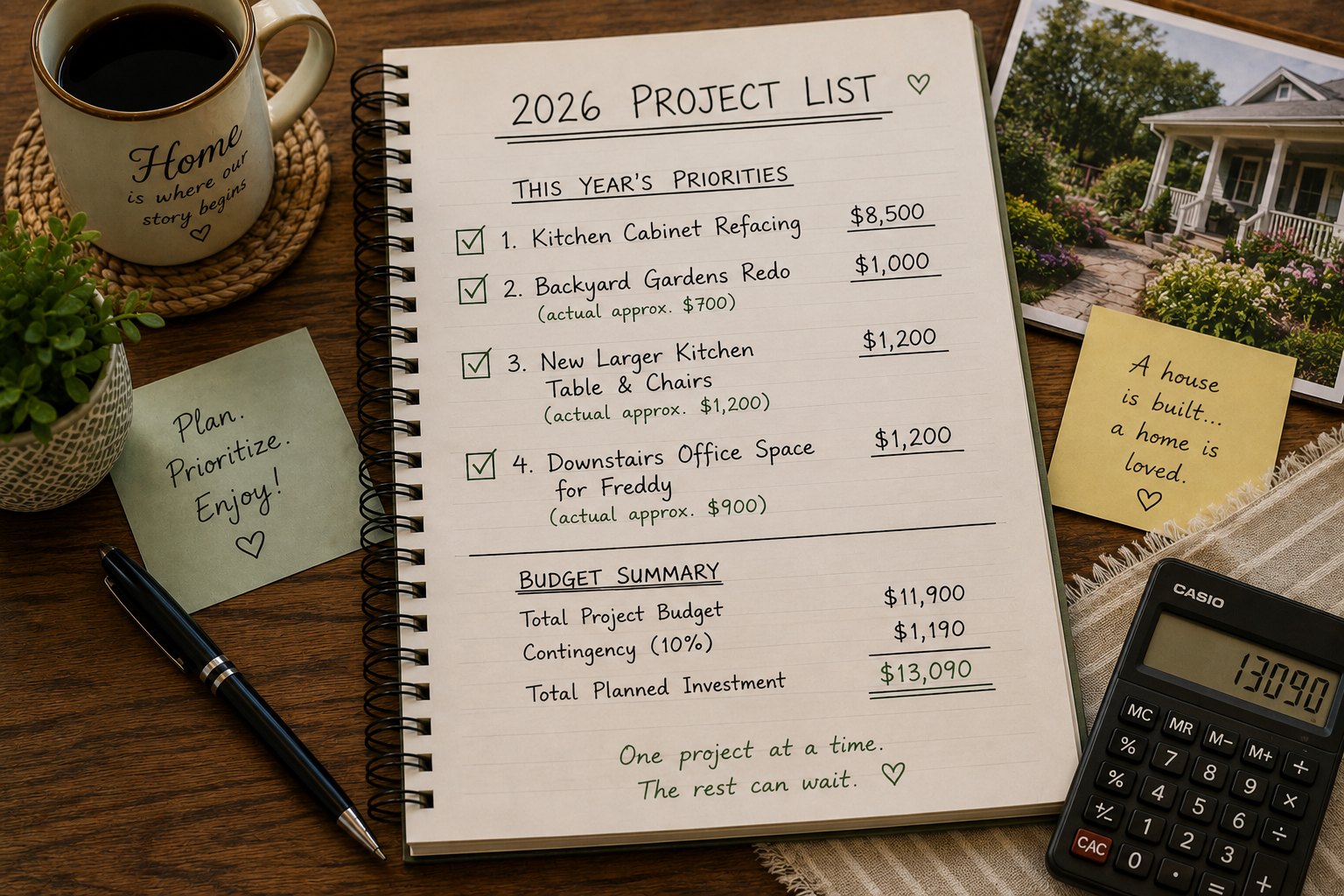
Realizing we couldn’t do everything all at once—financially, emotionally, or physically—we developed a habit that became incredibly important for us: yearly reset conversations. Nothing fancy. No complicated spreadsheets, just intentional conversations about what mattered most, what could realistically wait, what we could afford, and what season of life we were actually in.
Making a Plan
At the end of each year, we would sit down together and look honestly at the upcoming year ahead. We usually had a rough idea of what savings, bonuses, or extra income might be coming in, and that helped guide our decisions. Some years allowed for a larger project. Other years called for patience and smaller improvements instead.
Once we thought we knew which projects made sense for the upcoming year, the next step was always due diligence. We needed real numbers before emotions took over. If we were hiring professionals, we gathered estimates and compared options carefully. If we were tackling something ourselves, we researched material costs before diving in.
We also learned to build an extra 15–20% into the budget whenever possible because homes almost always uncover something unexpected once a project begins. Having that cushion brought great peace of mind. Every time.
Learning to Recalibrate Together
At first, I viewed home projects emotionally. I’m emotional by nature, and my instinct was to walk into a room and immediately start mentally redesigning it. I could very quickly convince myself that this absolutely needed to happen next. Fortunately, my hubby balances out that tendency and has always been more pragmatic.
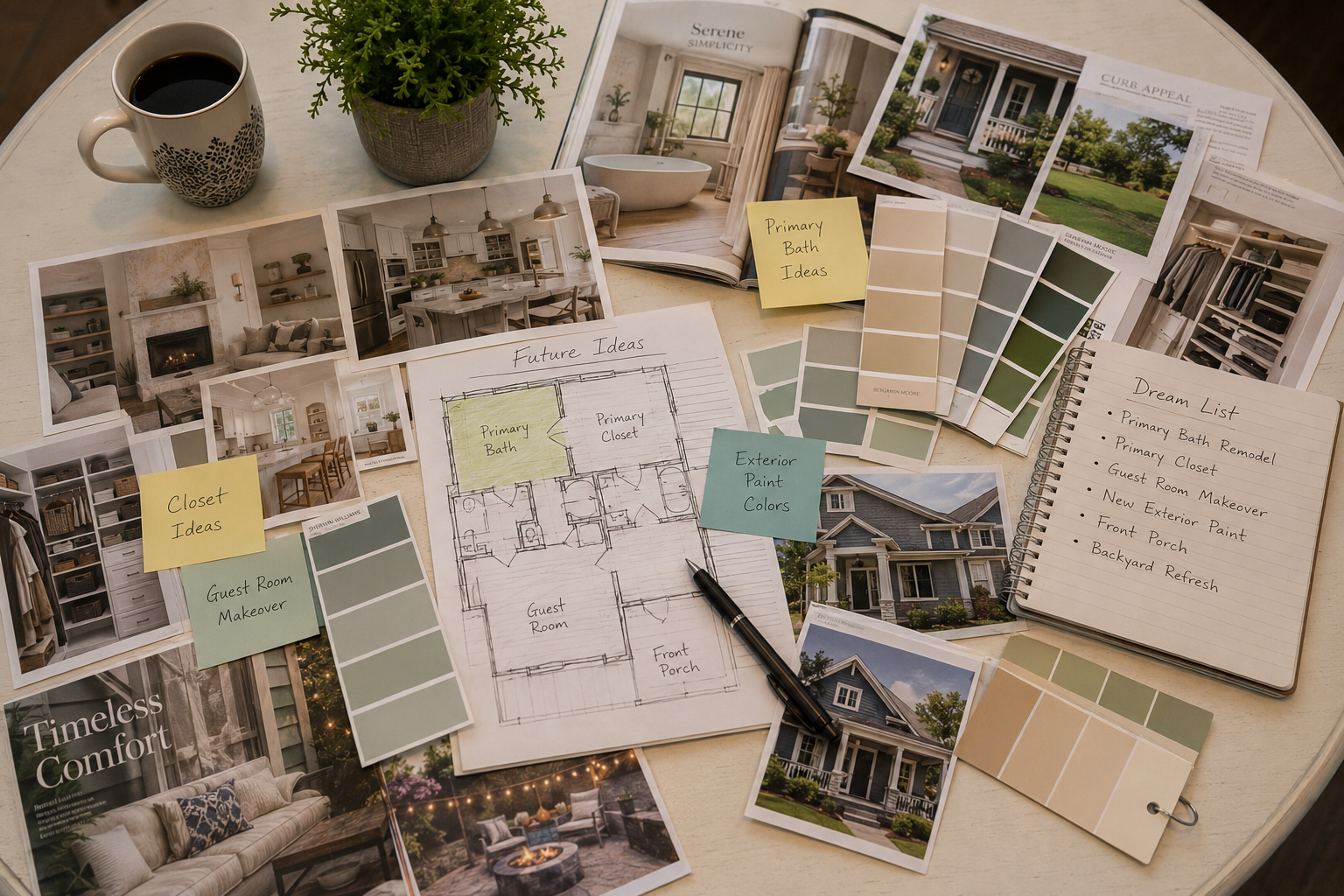
Our yearly reset conversations still tend to start the same way: throw every idea out on the table first. Dream a little. Talk about what we both hope to eventually change or improve in the house. That part mattered more than I realized at the time because it gave both of us space to feel heard before practicality entered the conversation.
The Negotiations
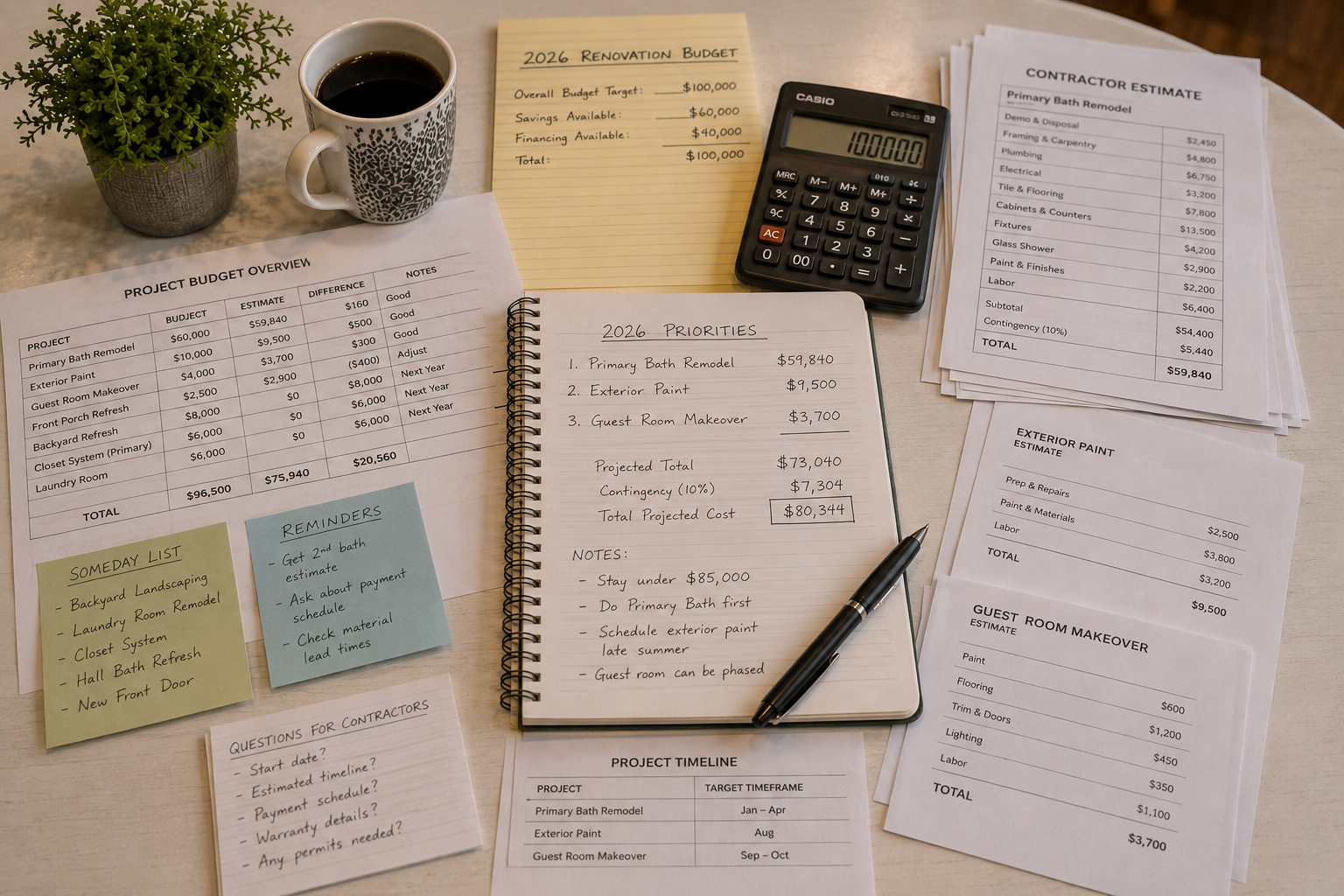
Then slowly, we would begin narrowing the list down together. What made the most sense financially? What project mattered most right now? What could realistically wait another year? There was always negotiating back and forth about priorities, timing, and budget. That process helped keep me grounded while reminding us that dreams absolutely matter. It prevented us from making emotional decisions in moments where patience needs to take precedence.
Not Every Dream Needs Immediate Action
One of the hardest lessons for me personally was learning that a delayed project wasn’t a dead project. Just because something had to wait didn’t mean it would never happen. Sometimes the smartest decision was “not yet.”
That felt frustrating to me. I wanted momentum. Progress. Visible change. But over time, I began to embrace the peace that comes with pacing yourself. When every project becomes urgent, the house starts running your emotional life instead of supporting it.
The Wish List Was Allowed to Evolve
Another thing these conversations taught us was flexibility. Some projects we thought were incredibly important fell completely off the list. Others rose unexpectedly because life changed, our needs changed, or we simply gained new perspective after living in the house longer.
That’s one reason I’ve always encouraged people not to rush major decisions too quickly after moving into a home. Sometimes the house teaches you what actually matters once you’ve lived in it for a while.
Looking back now, I don’t think those yearly reset conversations were really just about the house. They helped protect our marriage from turning every “next project” conversation into a fight.
The House Didn’t Need to Be Finished to Be Loved
A home doesn’t have to be fully finished to be deeply loved. There were entire seasons where rooms remained imperfect while life itself was still beautiful inside them. Holidays happened. Friends gathered. Memories were made. Unfinished projects don’t stop a house from being a home.
Next week I’ll share the next lesson our house taught us: how to finally enjoy the home we had worked so hard to build over time.
Now, what will you do next to love where you live?
Be sure to visit The Redesign Habit to share your redesign stories or reach out with your questions. We’d love to hear what you’re working on.
For more great stories and ideas please follow us on Facebook, Instagram, and subscribe to our YouTube Channel.