
Matching Adjacent: The Art of Not Quite Matching
There was a time when furnishing a family room was straightforward. You bought the sofa and matching loveseat. Maybe you added a matching chair. Then came the coffee table and two matching end tables. If you were furnishing a bedroom, you brought in five pieces of matching cherry furniture that were arriving on the same truck. Matchy matchy. Not that there’s anything wrongy wrongy with that.
There still isn’t. Matching pieces can make sense for a room. But not everything has to match exactly to work together. In fact, things can get a whole lot more interesting when they don’t.
Welcome to Matching Adjacent
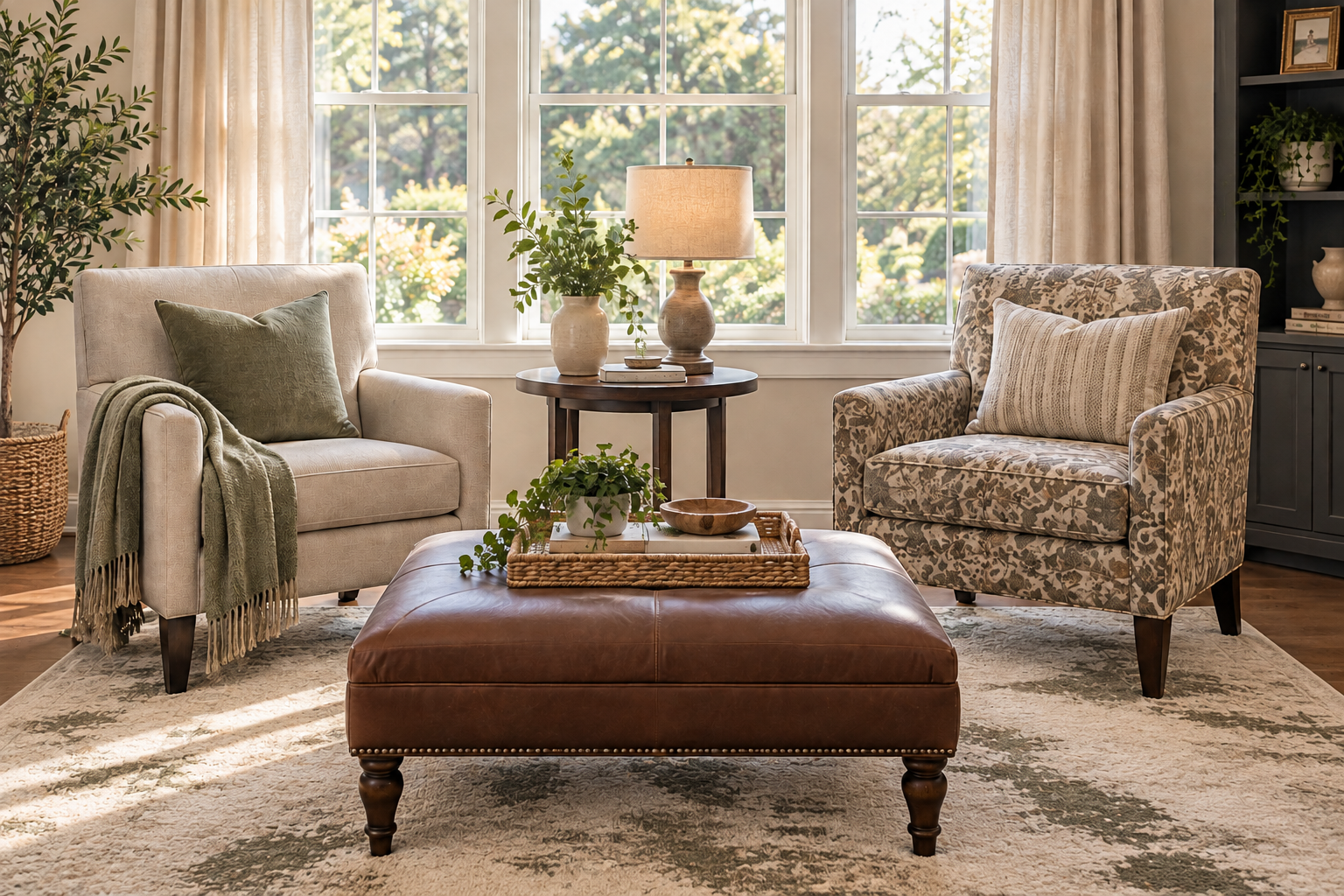
I use “matching adjacent” often when talking about design. It’s my way of describing things that don’t match but have enough in common that they look like they belong together. Think of it as related cousins versus identical sextuplets.
Maybe they share a color. Maybe wood tones share similar undertones. Maybe different style furniture has comparable visual weight. Or maybe something else in the room connects them. The goal isn’t sameness, it’s connection.
Matching is a tool. Matching adjacent gives you more.
My Living Room: Matching-Adjacent IRL
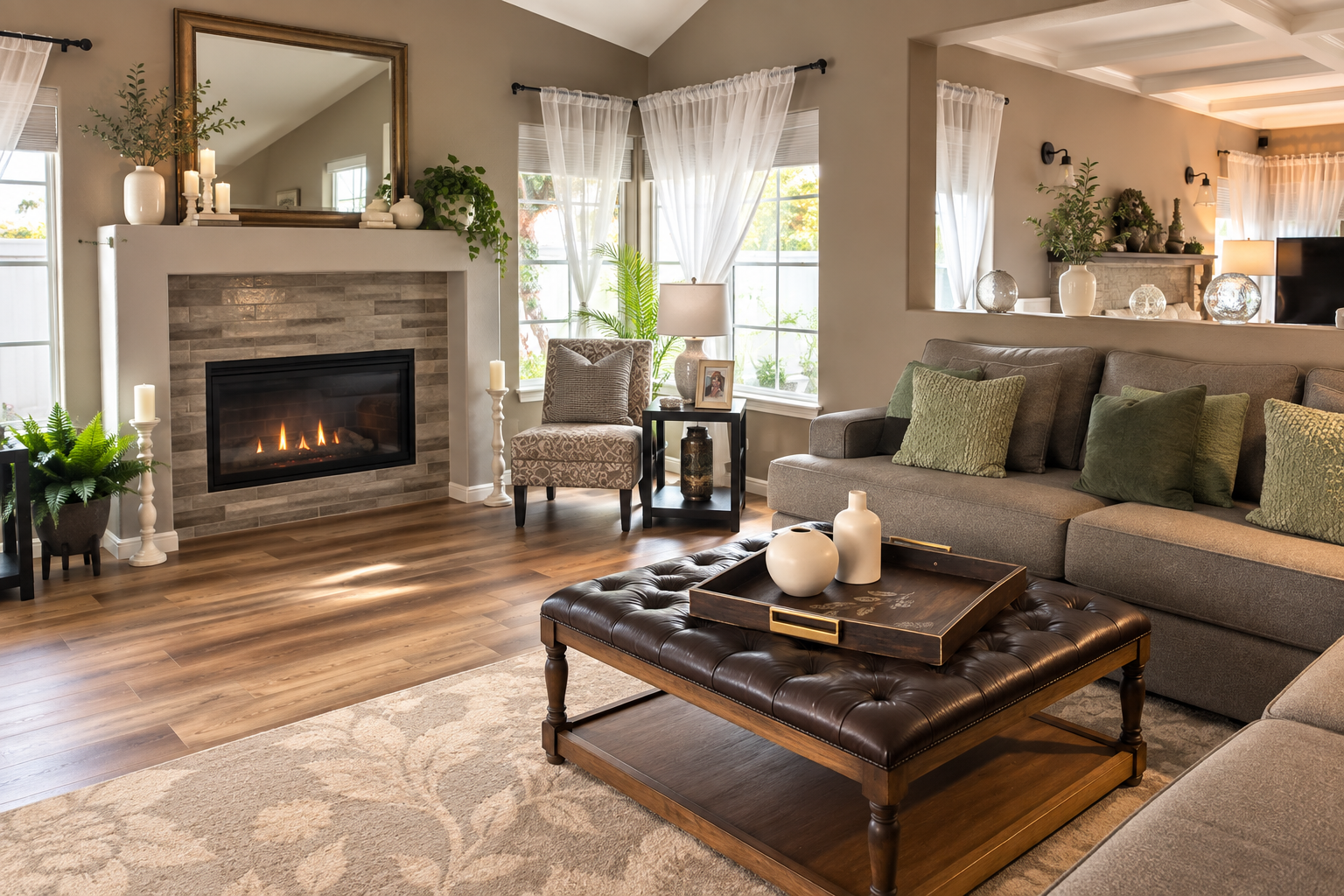
My living room sofa and loveseat match. It’s a big room where I wanted plentiful comfortable seating. The matching set makes sense. I did not feel compelled to turn in my designer card. But that’s pretty much where the matching stopped.
I paired them with a large four-foot-square leather ottoman, two distressed side tables, and an occasional chair in a patterned fabric. The chair doesn’t match the sofa and loveseat, but the fabric contains a hint of the same color. Different shapes, materials, textures and patterns—but enough connection to make everything feel cohesive.
Balance Makes Different Look Deliberate
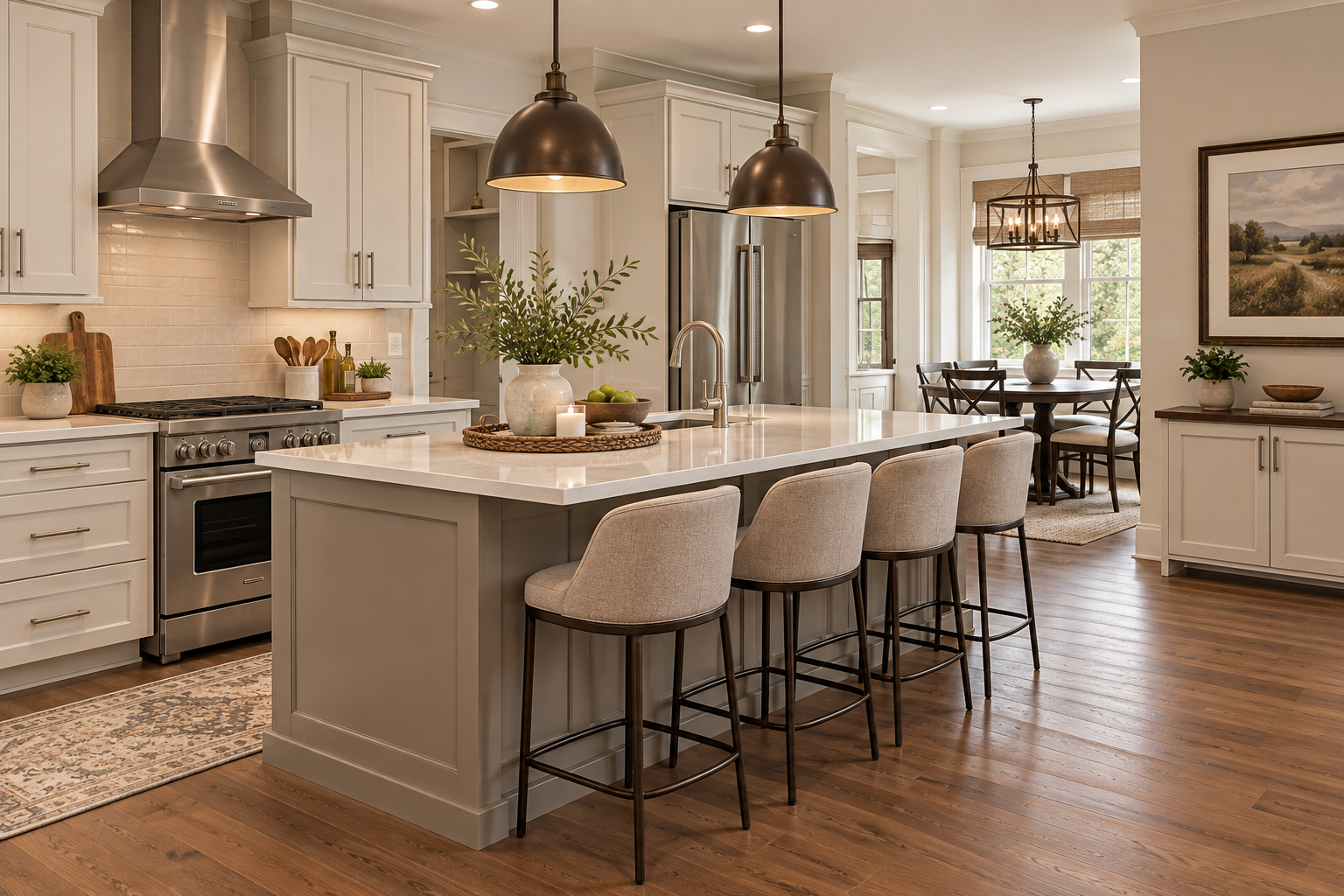
Another elegant example relies on mixed metals. Let’s say most of the metal finishes in your kitchen are nickel, but you fall in love with dark bronze pendant lights over the island. Great. Use them. But if those pendants are the only dark bronze anywhere in the room, they may look less like an intentional design choice and more like the lamp store was out of nickel.
Repeat that bronze elsewhere in the room—not right where you already used it. It might appear in a frame or fixture across the room, furniture legs farther away, or another element that makes sense in your space. The goal is to distribute the finish throughout the room, so your eye encounters it in different areas.
Repetition is the technique. Balance is the result.
Repetition Creates Connection
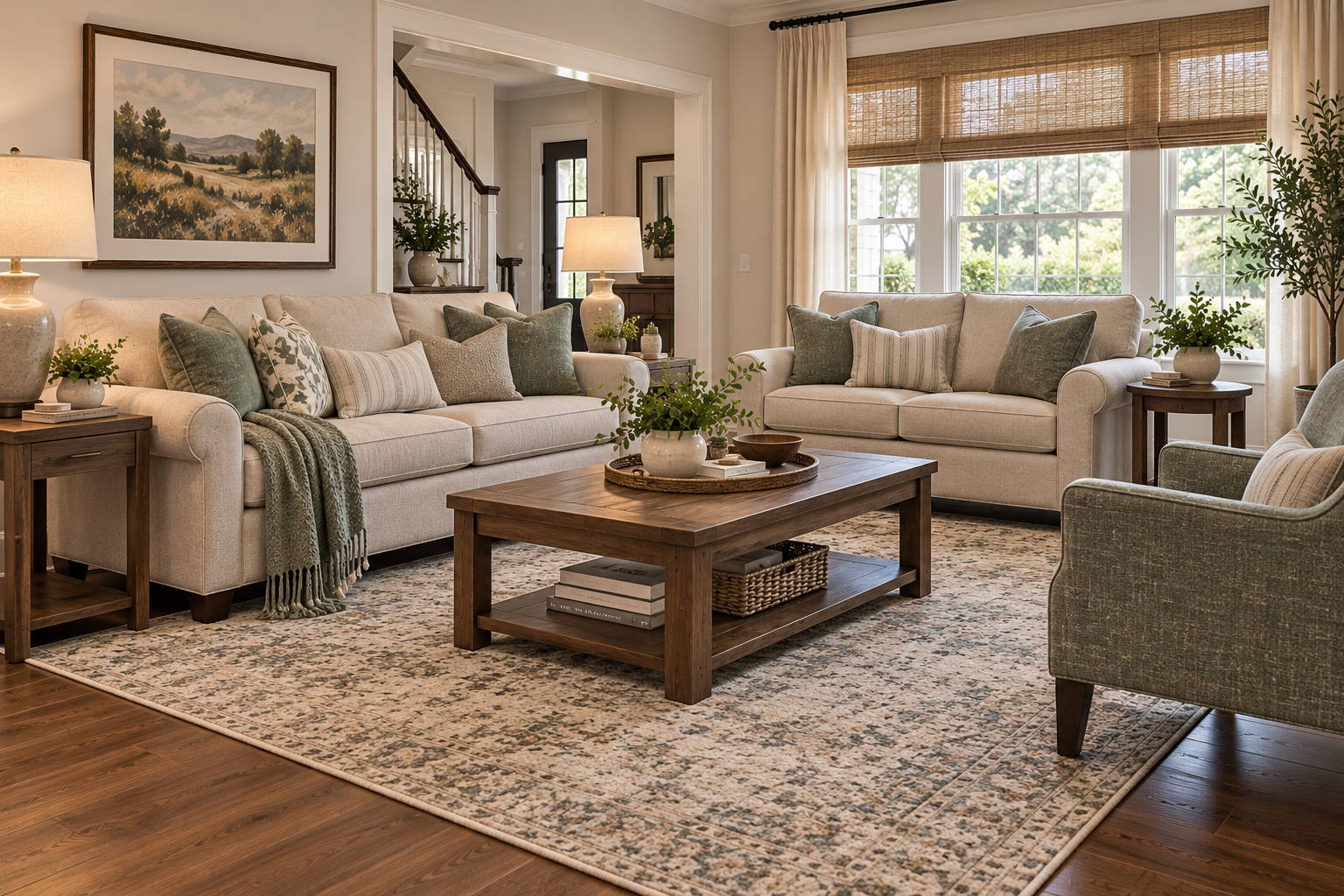
Color works the same way. Bring home a beautiful green pillow and put it in a completely neutral room with absolutely no other green, and there sits your lovely green pillow. All by itself. Wondering what it did wrong.
Repeat a little green in artwork, a patterned chair, a rug or another accessory, and suddenly it belongs. It doesn’t need to be the exact same shade or appear in equal amounts. You’re simply giving the eye another connection.
Look for the Thing That Connects the Things
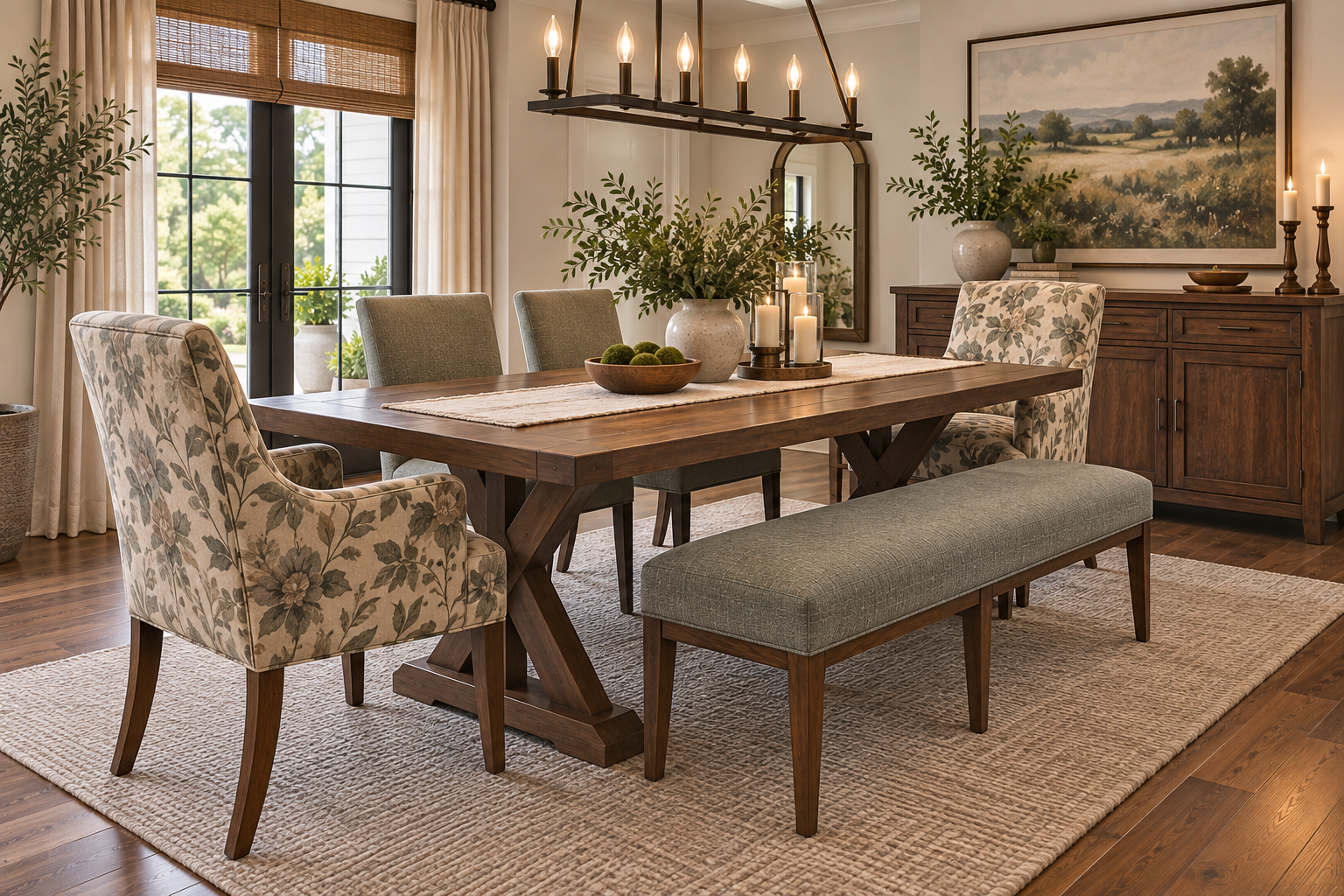
Sometimes two things don’t need to connect directly because something else in the room does the work for them. My living room has several warm wood finishes—some darker, some medium-toned. They don’t match, and they don’t need to. My flooring contains multiple warm wood tones, so it becomes a bridge between various pieces.
A large area rug can do the same thing. It might contain the color of your sofa, another color from your occasional chair and something you’ve repeated in your throw pillows. Artwork, patterned fabric, flooring, rugs and stone can all become that connecting element. When you’re struggling to make two things work together, don’t look only at those two things.
Look for what can connect the things.
Matching Adjacent Doesn’t Mean Anything Goes
There is, however, a small catch. Matching adjacent is not permission to put six wood finishes, four metals, seven unrelated patterns and furniture representing every design movement since Louis XIV into one room and declare victory. You do you, but prepare to be judged by visitors, who may call your place the witness protection home because nobody knows where anything came from. If that doesn’t bother you, rock on with your eclectic self!
Of course, your home could be part matchy matchy, part matching adjacent and a little extreme eclecticism. Key word: YOUR home. And if your tastes evolve over time, your home can evolve with them. Style is ultimately a reflection of your likes and what makes you feel most happy in your space.
Matching can create consistency in a room. Matching adjacent makes room for creativity.
Now, what will you do next to love where you live?
Be sure to visit The Redesign Habit to share your redesign stories or reach out with your questions. We’d love to hear what you’re working on.
For more great stories and ideas please follow us on Facebook, Instagram, and subscribe to our YouTube Channel.